Stride: one small plan for the week
I started Stride because I wanted to improve my own health and learn AI by building something I might actually use.
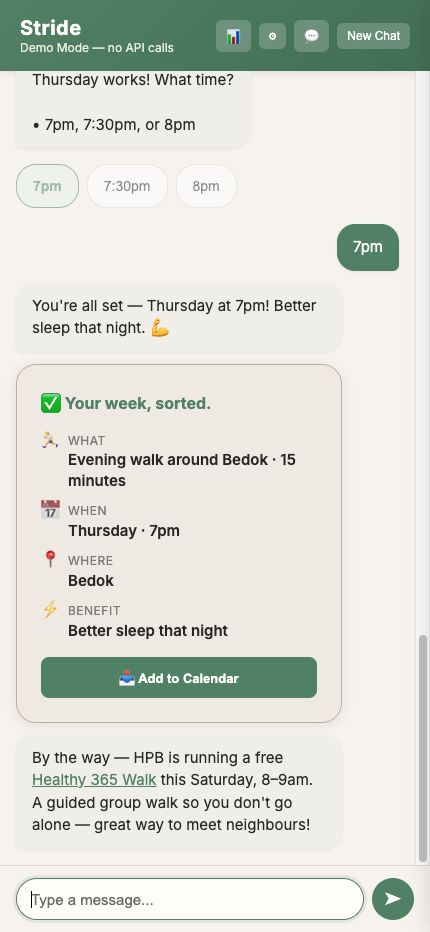
The idea is to help someone choose one manageable activity, decide when and where to do it, and adjust the plan when their week changes. I began with a web prototype, then moved the experience into Telegram to explore using reminders to help people return to their plans. The prototype saves the plan and provides a file the person can add to their calendar.
In an early demo, a tester deliberately tried to break the chatbot by changing their mind and giving unexpected answers. Stride couldn't handle the conversation. That showed me how much more work was needed when someone stepped outside the expected flow.
If Stride is meant to help people adapt their plans, it needs to cope when they change their minds. I need to test those conversations as carefully as the steps that lead to a completed plan.
Reading about MOH and its partners' work on HealthGuide@Home encouraged me. Its focus on turning health goals into personalised plans reinforced my interest in the problem Stride is exploring.
I have shown Stride to a handful of people so far. I still need to find out whether it helps them follow through over time, and what it offers beyond a regular ChatGPT conversation.
From the web prototype to Telegram
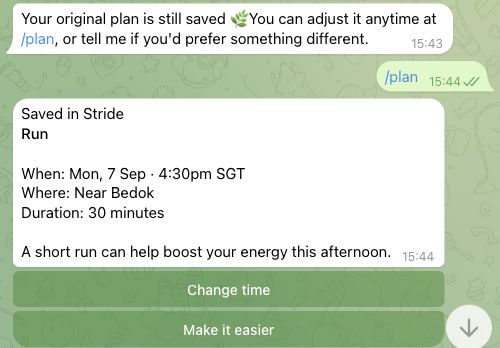
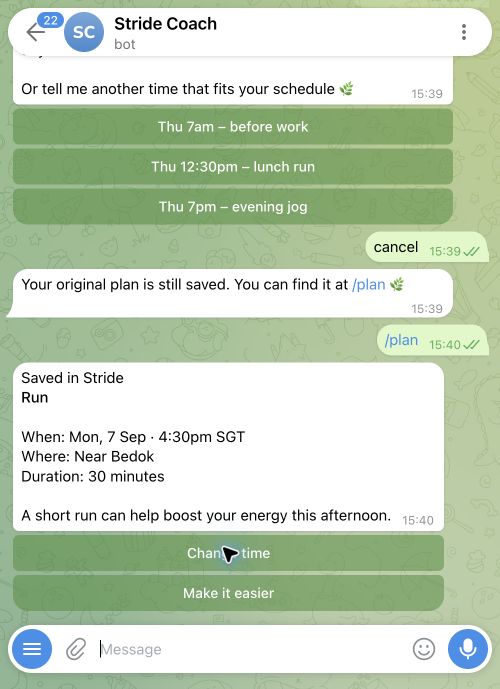
The Telegram prototype puts returning to a saved plan and choosing a change directly in the conversation. These live captures from September 2026 sit alongside the earlier web prototype, shown in Demo Mode with illustrative details.
Telegram · Return to your plan
Telegram · Keep the original
Earlier web prototype · Demo Mode